
Why Truck Accident Cases Involve More Defendants Than People Expect
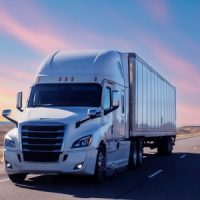
When one car hits another, the list of responsible parties is usually short: a driver, an insurance policy, and maybe a vehicle owner. Truck crashes rarely work that way. A single tractor-trailer on I-4 or I-275 can represent the work of half a dozen separate businesses, each responsible for a different piece of the trip. When that trip ends in a collision, our Tampa truck accident attorneys often find that fault is spread across several of them.
The Trucking Industry Splits Responsibility by Design
Modern freight runs on outsourcing. A retailer hires a broker, the broker books a carrier, the carrier leases a tractor from one company and a trailer from another, a warehouse crew loads the cargo, and an outside shop services the brakes. This arrangement keeps costs down for the industry. It also means the person behind the wheel may have had very little control over whether the truck was safe when it left the yard.
Depending on the facts, potential defendants can include:
- The driver, for speeding, fatigue, distraction, or impairment
- The motor carrier, for negligent hiring, poor training, or pushing drivers past hours of service limits
- The freight broker, if it chose a carrier with an obvious history of safety violations
- The shipper or loading company, when overloaded or poorly secured cargo shifted
- A maintenance vendor that signed off on worn brakes or tires
- The manufacturer of a defective truck component
- A government entity responsible for a dangerous road design or work zone
Why Naming Every Defendant Matters in Florida
This is not about casting a wide net for its own sake. Under Florida’s comparative fault statute, Section 768.81 of the Florida Statutes, fault is generally apportioned among the responsible parties, and each defendant typically pays only its own share. Defendants are also allowed to argue that someone outside the lawsuit caused the crash. If a jury decides that a loading company nobody sued carried 30 percent of the blame, that portion of the damages may be very hard to recover. Leaving a party out can quietly shrink a verdict.
Insurance Coverage Is Layered, Too
Federal rules set minimum coverage levels for interstate carriers. Under 49 CFR 387.9, for-hire carriers hauling general freight in vehicles rated at 10,001 pounds or more must carry at least $750,000 in public liability coverage, and certain hazardous materials loads require $5,000,000. Those figures sound large until they are measured against a spinal cord injury or a lifetime of care. Each additional responsible party may bring its own policy, and in serious cases, reaching those extra layers can be the difference between a partial recovery and a complete one.
The Evidence Behind Each Defendant Disappears Quickly
Identifying every responsible company depends on records those companies control: electronic logging data, dispatch messages, broker agreements, bills of lading, and maintenance files. Some of this information can be overwritten or discarded within weeks. Early preservation letters are often the only way to keep it intact.
Talk to Moore Law Before the Paper Trail Goes Cold
The first adjuster who calls after a truck crash represents one company, and that company has every reason to keep the spotlight on someone else. Our Tampa truck accident lawyers look at the entire chain of businesses behind the truck, not just the name on the door. To find out who may be responsible for your injuries, call Moore Law at 813-510-5400 or reach out online.
Sources:
https://www.leg.state.fl.us/statutes/index.cfm?App_mode=Display_Statute&URL=0700-0799/0768/Sections/0768.81.html
https://www.ecfr.gov/current/title-49/subtitle-B/chapter-III/subchapter-B/part-387/subpart-A/section-387.9
